 winning power
Preventing Backup Power Generator Set Failure Modes 2025
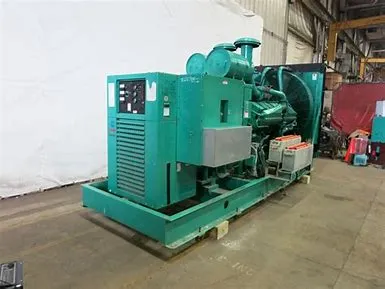
As the technical director of our engineering division, I spend my days analyzing points of failure. In an increasingly electrified and data-dependent world, the conversation around power continuity has fundamentally shifted. It's no longer just about having a backup; it's about guaranteeing that backup performs flawlessly under duress. This is why understanding and engineering against backup power generator set failure modes 2025 is not merely a technical exercise—it is the cornerstone of operational resilience for your business. The cost of failure, measured in lost data, production downtime, or compromised safety, has grown exponentially, making the selection of a power generation partner a strategic imperative.
The Evolving Landscape of Power Dependency and Failure
The demands placed on backup power systems have never been greater. Digital transformation, the proliferation of IoT devices, and the reliance on cloud infrastructure mean that even a momentary lapse in power can trigger a cascade of operational and financial consequences. We've moved beyond simple power outages from storms; today's threats include grid instability from fluctuating renewable inputs and sophisticated cyber threats targeting utility infrastructure. In this high-stakes environment, a "set and forget" approach to backup power is a recipe for disaster.
From our vantage point, we see recurring failure patterns in equipment that wasn't designed for this new reality. These aren't always catastrophic mechanical breakdowns. More often, they are insidious issues that surface only during an actual emergency. Common failure modes we frequently diagnose in the field include:
- Fuel System Contamination: Modern diesel fuels, especially biofuels, are susceptible to water absorption and microbial growth. Over time, this creates sludge and clogs filters, starving the engine of fuel precisely when it's needed most. We've traced numerous start-failures back to inadequate fuel polishing and filtration systems.
- Battery and Starting System Weakness: The single most common point of failure remains the starting battery. Insufficient trickle charging, terminal corrosion, or simply specifying an underrated battery for the climate can render a multi-ton generator set useless.
- "Wet Stacking" in Diesel Engines: This occurs when a diesel generator is consistently run at a light load, far below its rated capacity. Unburnt fuel and soot accumulate in the exhaust system, leading to reduced performance, increased emissions, and eventual engine damage. This is a frequent problem in facilities that have oversized their generators without a proper load management strategy.
- Control Panel and Sensor Malfunctions: As controllers become more sophisticated, they also introduce new potential points of failure. A faulty coolant temperature sensor or a logic error in the automatic transfer switch (ATS) can prevent the generator from starting or transferring the load, even if the engine and alternator are perfectly healthy.
Our process begins long before a quote is issued. We engage with your technical team to understand the specific operational demands, environmental conditions, and load profile of your facility. This diagnostic approach allows us to identify and mitigate risks proactively. Are you still treating your backup power system as a commodity, or as the mission-critical asset it truly is?
Engineering Resilience: Our Design Philosophy for Backup Power Generator Set Failure Modes 2025
Anticipating and designing out failure is embedded in our engineering DNA. We believe that reliability isn't an added feature; it's the product of countless decisions made at the material, component, and system levels. Our approach to mitigating backup power generator set failure modes 2025 is built on a foundation of robust design, advanced simulation, and empirical testing.
It starts with material science. The structural integrity of a generator set is critical for managing vibration and thermal stress over a multi-decade lifespan. We utilize specialized high-strength steel alloys for engine blocks and base frames, which provide superior rigidity and fatigue resistance compared to standard cast iron. This meticulous material selection dampens harmful vibrations that can lead to premature wear on ancillary components like sensors, wiring harnesses, and cooling system connections.
Precision is paramount. In our powertrain lab, we've correlated microscopic imbalances in rotating assemblies with long-term bearing and seal failures. This is why we've invested in advanced machining and metrology, achieving a level of precision that far exceeds industry norms. For example, we maintain a proprietary crankshaft balancing process achieving less than 5μm runout. This dramatically reduces internal engine stresses, extends the life of critical bearings, and ensures smoother, quieter operation.
Before any metal is cut, our designs are validated in the digital realm. We employ sophisticated modeling tools, including Computational Fluid Dynamics (CFD), to simulate airflow and heat dissipation within the generator enclosure. Using Computational Fluid Dynamics (CFD), we can identify potential hot spots and optimize the placement of fans, radiators, and ventilation louvers. This ensures the engine operates within its ideal temperature range even under 110% load in high ambient temperatures, effectively eliminating overheating as a primary failure mode.
Finally, every new design and critical component revision is subjected to grueling physical verification. In our fatigue lab, components undergo accelerated life testing that simulates thousands of hours of operation in a matter of weeks. A new alternator design, for instance, might be subjected to 5,000 hours of continuous thermal cycling and full-load stress testing to validate its insulation and bearing systems. This data-driven approach allows us to move from theoretical reliability to proven, quantifiable durability.
[INSERT_IMAGE_HERE: A detailed CAD rendering of a generator set's internal components]Proven Performance in Mission-Critical Applications
Engineering theory is only valuable when it delivers tangible results in the real world. Our generator sets are the silent guardians of continuity for a diverse range of clients, from hyperscale data centers to remote infrastructure operators. Each deployment provides further validation of our design philosophy.
Case Evidence 1: Ensuring Data Center Uptime
A major colocation data center provider was experiencing intermittent power sags from the local grid, causing costly, millisecond-long disruptions that threatened their "five-nines" (99.999%) uptime guarantee. Their existing backup system had a response time that was too slow to bridge these micro-outages. We were brought in to engineer a solution. Our team deployed a series of our prime-power-rated generator sets configured in a parallel N+1 redundancy scheme. The key innovation was our proprietary controller, which integrates with the facility's UPS system to anticipate load changes and initiate a "soft load transfer" with near-instantaneous response. The result? Over the past 24 months, the facility has maintained 100% Data Center Uptime through multiple grid events, preventing an estimated $1.5 million in potential SLA penalties and preserving client trust.
Case Evidence 2: Reliability in Extreme Environments
A national telecommunications company operates a network of remote cell towers in a mountainous region with harsh winters, where temperatures regularly drop below -30°C. Their previous generators suffered from frequent start-failures due to fuel gelling and battery degradation. We engineered a custom solution for a small batch of their most critical sites. This included a fully-enclosed, arctic-rated package featuring thermostatically controlled battery warmers, an engine block heater, and an integrated fuel heating and pre-filtration system. Since commissioning, these units have achieved a 100% start reliability record, even during the most severe winter storms, ensuring uninterrupted communication services for the surrounding communities.
[INSERT_IMAGE_HERE: A clean, well-lit installation of our backup generator in a data center server room]Manufacturing Integrity: From Raw Material to Final Load Test
A superior design can be easily compromised by inconsistent manufacturing. That is why we have built a quality management system that embeds integrity into every stage of the production process. Our facilities are designed for scalable production, but our focus remains on precision and verifiability, not just volume.
We operate under a framework of digital traceability. From the moment raw materials arrive, they are logged and tracked. We believe in accountability at the component level, which is why every critical component, from the crankshaft to the fuel injector, is laser-etched with a unique serial number. This number links to a comprehensive digital record that includes material composition certificates, the specific CNC machine and operator involved in its fabrication, and all dimensional inspection results. This provides an unprecedented level of quality control and allows for rapid root cause analysis should an issue ever arise.
Our commitment to quality is validated by our adherence to internationally recognized standards, such as ISO 9001. But we go further. Our internal standards often exceed those mandated by certification bodies. The most critical stage is our end-of-line validation. Every single generator set that leaves our factory undergoes a rigorous, multi-hour load bank test. We don't just do a spot check. We simulate a real-world power failure, running the unit at 100-110% of its rated load for a minimum of eight hours while monitoring hundreds of data points—from exhaust gas temperatures to alternator voltage regulation. Only after passing this comprehensive performance audit is a unit certified for shipment.
[INSERT_IMAGE_HERE: A technician monitoring a generator set during a full-load bank test on our factory floor]A Partnership Approach to Mitigating Backup Power Generator Set Failure Modes 2025
We view our role as more than just a manufacturer; we are your partner in ensuring operational continuity. This partnership begins with a collaborative approach to specification and extends through delivery, commissioning, and long-term support. Our entire process is designed to de-risk your investment and deliver a solution that is precisely tailored to your needs.
Customization is at the core of what we do. We understand that mitigating critical backup power generator set failure modes 2025 for healthcare facilities involves different challenges than for a construction site, such as stringent noise regulations and integration with life-support systems. Our engineering team works directly with yours to configure everything from enclosure acoustics and fuel tank capacity to emissions control systems and control panel logic. Our modular control system architecture allows for seamless integration with existing Building Management Systems (BMS), providing a unified view of your facility's infrastructure without the need for expensive and complex third-party gateways.
To aid your decision-making process, we've developed a checklist of key evaluation points. When assessing any generator set, we encourage your team to look beyond the nameplate power rating and scrutinize the details that determine long-term reliability.
Buyer's Checklist for Evaluating Genset Reliability:
- Engine Block Material & Casting Process: Ask for details on the alloy and whether it's designed for continuous or standby duty.
- Alternator Winding Insulation Class: Verify that it is Class H, which provides the highest thermal margin for handling overload conditions.
- Controller Logic and Redundancy: Does the controller have redundant processors? How does it protect against sensor failure?
- Fuel System Filtration and Water Separation: Look for multi-stage filtration and an effective water-in-fuel (WIF) sensor and alarm.
- Load Bank Testing Certification: Insist on seeing the detailed report from the manufacturer's final load bank test for the specific unit you are purchasing.
Our global logistics and technical coordination teams ensure a smooth process from order to operation. We provide clear communication on lead times and work with your project managers to align delivery schedules with site readiness, ensuring a seamless installation and commissioning experience anywhere in the world.
Ultimately, the best way to prevent failure is through diligent engineering, transparent manufacturing, and a collaborative partnership. As you plan for the challenges ahead, the critical task of addressing backup power generator set failure modes 2025 should be at the forefront of your strategy. Choosing a partner who understands these risks and has a proven methodology for mitigating them is the most important decision you will make in safeguarding your operations.
We invite you to engage with our engineering team to discuss your specific power continuity challenges. Let us demonstrate how our methodical approach to design and manufacturing can provide the foundation of reliability your organization depends on.
For more detailed information, please visit our official website:backup power generator
About the author: Dr. Alistair Finch, Technical Director at our firm, brings over two decades of experience in power generation systems and mechanical engineering. He specializes in failure mode and effects analysis (FMEA) for mission-critical infrastructure, leading our R&D team in developing next-generation gensets. Dr. Finch is passionate about translating complex engineering principles into tangible reliability for our global clients, ensuring their operations are always powered and protected. He holds a Ph.D. in Mechanical Engineering from a leading technical university.